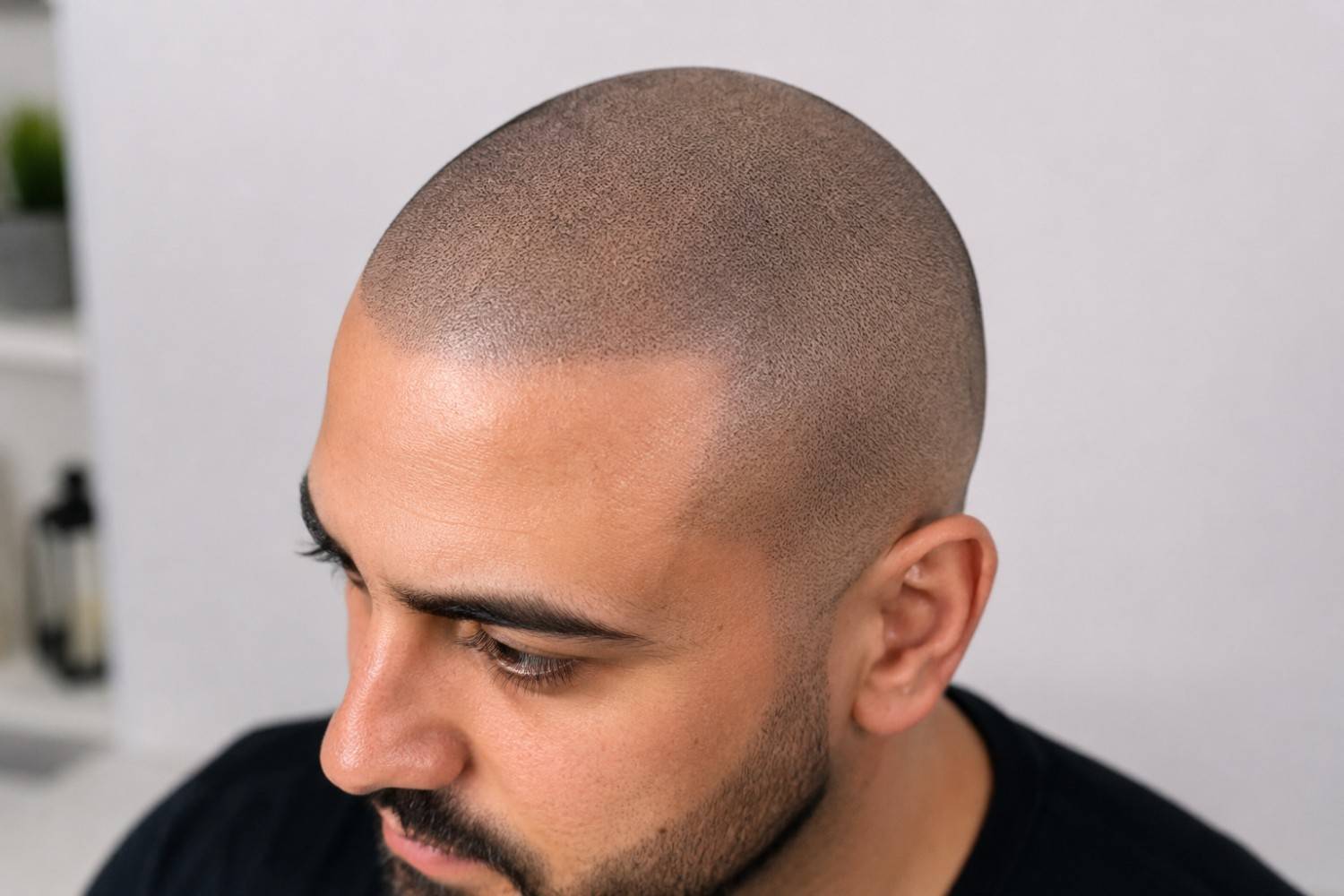
After healing, how realistic scalp micropigmentation looks becomes clear as the pigment softens and blends with the skin. The tiny impressions can resemble natural hair follicles, creating the look of a close buzz cut or added density. Maxim SMP uses careful pigment placement and skilled techniques to help healed results appear softer, balanced, and more natural over time.
What Does Scalp Micropigmentation Look Like After Healing?
The First Few Days
Right after treatment, the pigment may look dark and bold. The scalp may also feel sore or look a little red. Small flakes can form as the skin starts to heal. These changes are normal and do not show the final result.
The Healing Timeline
Most people need about four to six weeks for full healing. During this time, the skin repairs itself, and the pigment settles. You may see small changes from week to week. Good aftercare can help the scalp heal well and keep the color even.
Softer Pigment
The color often becomes lighter as the scalp heals. This softer shade helps the dots look less sharp. It also shows how realistic scalp micropigmentation looks once the early dark color fades and the skin becomes calm.
Hair Follicle Effect
Each small dot can look like short hair under the skin. The dots create the look of a close buzz cut. They can also add the look of more hair in thin areas without standing out.
A Natural Blend
The final color should match the skin and nearby hair. The hairline should have soft edges and small changes in shape. Strong healed scalp micropigmentation results blend with the scalp, so the treatment looks natural and less easy to notice.
Why Does Scalp Micropigmentation Look More Natural After Healing?
Pigment Settles
The pigment looks dark right after the treatment. As the skin heals, the pigment settles into the scalp. This change helps the dots look softer and less bold. It also shows how realistic scalp micropigmentation looks once the skin becomes calm.
Color Softens
The color slowly becomes lighter during healing. It may lose some of its dark shade, but this is a normal part of the process. The softer color creates a better match with your natural skin tone and hair color.
Dots Look Less Sharp
Fresh pigment dots may look clear and sharp at first. As the skin heals, their edges fade a little. The dots still remain visible, but they start to look more like small hair roots instead of fresh marks.
A Hair Shadow Forms
The healed dots work together to create a soft hair shadow. This effect can make a shaved scalp look fuller. Good healed scalp micropigmentation results can copy the look of short hair growing from the scalp.
It Blends With Hair
The final shade should match your current hair. Careful color choice and dot placement help the treated area blend with nearby hair, so the full result looks smooth and natural.
Factors That Affect How Realistic Your Results Look
Experience of the Technician
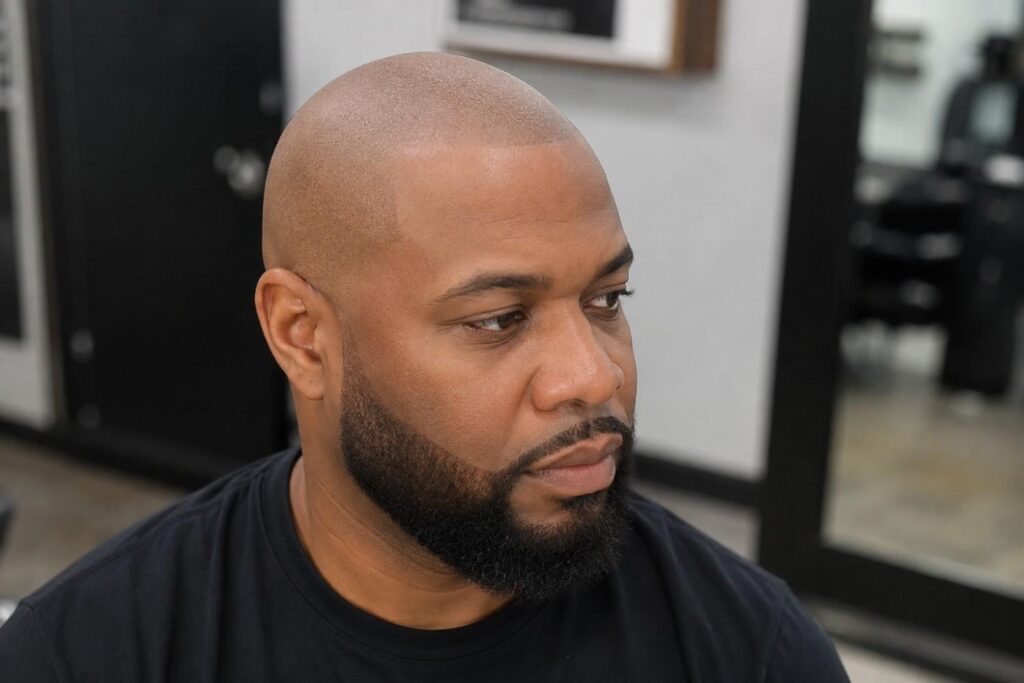
A skilled technician places each dot with care. Good spacing keeps the dots from looking too close or too far apart. A soft hairline also helps the treatment look natural. The right amount of density makes the scalp look even without looking too dark. This careful work helps show how realistic scalp micropigmentation looks after the skin has fully healed.
Medical Grade Pigments
Medical grade pigments are made to keep a stable color over time. They also work well with the skin during healing. As the pigment settles, the color becomes softer and more natural. This helps the scalp keep a clean and even look for a longer time.
Skin Type
Your skin type can change how the pigment heals. Oily skin may cause the dots to spread a little more, while dry skin may hold the dots more clearly. Every person heals in a different way. We check your skin before treatment so we can create the best plan for you.
Multiple Treatment Sessions
One session is often not enough for the best finish. We slowly build the color and density over several visits. This step helps each layer blend well with the last one. As a result, healed scalp micropigmentation results often look softer, more even, and more like real hair.
Factors That Help Natural Results:
- Proper spacing: Keeps each dot looking clean and even.
- Soft hairline: Creates a natural shape that fits your face.
- Even density: Adds fullness without making the scalp look too dark.
- Quality pigment: Helps the color stay balanced as it heals.
- Careful planning: Gives us time to build a natural look step by step.
What Happens During the Healing Process?
Your scalp will change as it heals. Some changes may look strange at first, but they are often part of the normal healing process. These steps help explain how realistic scalp micropigmentation looks once the skin has fully healed.
- Dark color: The pigment may look very dark right after treatment. Redness can also make the color look stronger.
- Light flaking: Small, dry flakes may form on the scalp. Let them fall off on their own. Do not scratch or pick them.
- Color settles: The pigment starts to settle as the skin heals. The shade becomes more even during this stage.
- Pigment softens: The dots slowly become lighter and less sharp. This change helps them look more like short hair roots.
- Final healed look: The scalp often needs four to six weeks to heal. At this point, the dots should blend with your skin and nearby hair. The full result should look soft, clean, and natural.
How Long Does It Take to See Final Results?
Early Healing
Your scalp starts to heal right after treatment. The pigment may look dark during the first few days. You may also see mild redness or small flakes. These signs often fade as the skin heals.
Touch-Up Session
You may need a touch-up after the first session has healed. We check the color, hairline, and dot spacing. Then, we fill light areas and make the blend look more even. This step can improve the final result.
Stable Color
The pigment often needs four to six weeks to settle. During this time, the color becomes lighter and softer. The settled shade helps show how realistic scalp micropigmentation looks when it blends with your skin and natural hair.
Long-Term Look
Once the color settles, you can see the full result. The dots should look like short hair roots and form a soft hair shadow. Sun care and good scalp care can help the result stay fresh for longer.
Can Everyone Achieve Natural-Looking Results?
Men and Women
Both men and women can get natural-looking results. We create a treatment plan that fits your hair loss, skin tone, and hairline. We also adjust the size, color, and spacing of each pigment dot. This careful approach helps show how realistic scalp micropigmentation looks after the scalp has fully healed.
Different Hair Loss Stages
Scalp micropigmentation can help people with mild thinning or more advanced hair loss. We change the amount of pigment to match the level of hair loss. People with thin hair can choose 3D scalp micropigmentation to create the look of more hair and better scalp coverage.
Scar Concealment
Scars from injuries or past procedures can stand out on the scalp. We place small pigment dots over the scar to help it blend with the skin around it. Our scar revision treatment can reduce how easy the scar is to see and create a smoother, more even look.
Thinning Hair
People with thinning hair often want to make the scalp less visible. We place pigment between your existing hair to create the look of thicker hair. We may also recommend scalp microneedling to support a healthier scalp and improve the overall appearance.
Realistic Expectations
Every person heals in a different way, so results can vary. We explain what you can expect before treatment starts. With the right plan, good aftercare, and enough healing time, you can enjoy a soft, natural look that matches your features.
Why Patients Choose Us
Maxim SMP provides care that focuses on safety, comfort, and natural-looking results. Every treatment starts with a full consultation to learn about your hair loss, skin type, and goals. This helps create a plan that fits your needs and gives you the best possible outcome.
Medical Grade Pigment
Medical grade pigment is made for scalp procedures, not regular tattoos. It keeps a stable color and heals well in the skin. As the pigment settles, it creates a softer finish. This helps patients see how realistic scalp micropigmentation looks after the healing process is complete.
Skilled Technicians
Our experienced technicians have completed thousands of scalp micropigmentation procedures for men and women. Careful dot placement, natural hairline design, and even density help create results that blend well with your existing hair and skin.
Physician Supervision
Every procedure takes place in a professional clinic under physician supervision. This level of care helps improve safety and supports better treatment planning. Each visit also gives you the chance to ask questions and understand every step of the process.
Personalized Treatment
No two people have the same hair loss pattern, so every treatment plan is different. Advanced techniques help match the pigment to your skin tone and create a natural look. Flexible financing options are also available, making treatment easier for many patients while supporting long-lasting results.
Ready to Enjoy Natural-Looking Results?
Learn how realistic scalp micropigmentation looks with a treatment plan made for your hair, skin, and goals. Maxim SMP uses careful pigment placement to create a soft hairline and the look of short hair roots. Our team will explain the process, healing time, and expected results. Contact us to book your free consultation. Take the first step toward a fuller, more natural-looking scalp with skilled care and a plan that fits you.
FAQs
How realistic does scalp micropigmentation look after healing?
Scalp micropigmentation can look very natural after the skin heals. The pigment becomes softer and blends with your skin and nearby hair. Skilled dot placement can copy the look of short hair roots. The final result depends on your skin type, hair color, treatment plan, and healing process.
How long does scalp micropigmentation take to heal?
The scalp often needs about four to six weeks to heal fully. Redness may fade within a few days. Small flakes may form during the first week. The pigment then becomes lighter and softer. Follow all aftercare steps and avoid picking the scalp so it can heal well.
Does scalp micropigmentation fade after healing?
Some fading during healing is normal. Fresh pigment often looks darker than the final shade. As the skin heals, the color settles and becomes softer. Sunlight, skin type, and scalp care can affect the color over time. Touch-up sessions may help keep the result fresh and even.
Can people tell that I have scalp micropigmentation?
A well-planned treatment should blend with your natural hair and skin. The pigment dots should look like tiny hair roots, not tattoo marks. A soft hairline, proper spacing, and a good color match can make the treatment hard to notice. Results may vary for each person.
How can I keep my results looking natural?
Follow your aftercare plan and keep the scalp clean during healing. Avoid strong sunlight and use scalp-safe sun protection once the skin heals. Do not scratch or pick any flakes. Good scalp care and touch-up visits can help the pigment stay soft, even, and natural-looking.