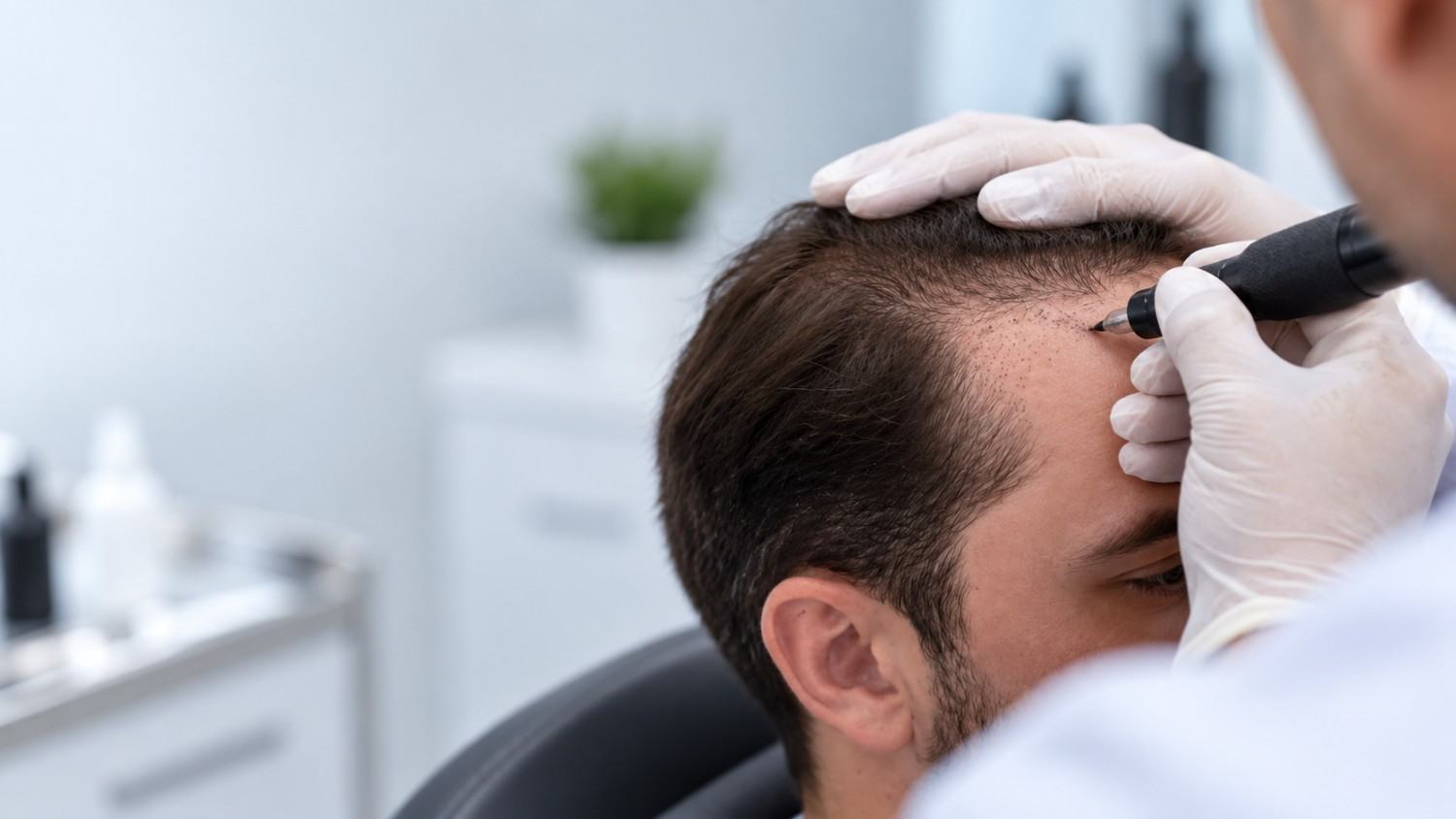
For people facing thinning hair, scalp micropigmentation for hair loss uses small pigment dots to copy the look of natural follicles or a neat buzz cut. This non-surgical treatment offers a minimally invasive way to improve density.
Maxim SMP offers this treatment for men and women with thinning hair, pattern baldness, or visible scalp areas. Each procedure aims to create a natural look based on the client’s needs and goals.
How Does Scalp Micropigmentation Work?
Scalp Assessment
The first step checks your scalp, hair, and areas with hair loss. At Maxim SMP, our team also asks about your needs and goals. This check helps us plan the right look and level of coverage for you.
Hairline Planning
Your new hairline should suit your face, age, and style. Each design is unique because every client has different needs. Our approach to scalp micropigmentation for hair loss aims to create a soft, natural shape. You can review the design before the work starts.
Pigment Selection
The right pigment should blend with your hair and skin tone. This choice matters because a poor match may stand out. As a non-surgical hair loss solution, the process uses pigment to copy the look of short hair. Our team tests the shade with care.
Pigment Application
Small pigment dots are placed across the planned areas. Our 3D scalp micropigmentation method builds these dots in light layers. Each layer adds depth, so the scalp can look fuller. Careful spacing also helps the dots blend with your natural hair.
Final Review
Your scalp needs time to heal before the final check. The pigment may look dark at first, but it can soften as your skin heals. Our team reviews the color, shape, and overall blend. Small changes can then be made if needed.
Who Can Consider Scalp Micropigmentation?
People With Thinning Hair or Bald Areas
People with thinning hair may see more of their scalp through the hair. Scalp micropigmentation for hair loss can make these thin areas look more full. It may also help people with pattern baldness, a receding hairline, or hair loss around the crown.
People With Alopecia or a Shaved Style
Some forms of alopecia can leave bare or thin spots on the scalp. A non-surgical hair loss solution may help hide the color gap between the hair and scalp. People who like a shaved look may also use this method. The small pigment dots can look like short hair on the scalp.
People With Scalp Scars
Scars can stand out when hair is short or thin. Scar revision with scalp pigment may help reduce the look of some marks. The pigment can blend the scar with the skin and nearby hair. Results will depend on the size, color, and shape of the scar.
A consultation can help you decide if this procedure fits your needs. Our team can check your scalp, hair loss, skin, and goals. We can then explain the process and possible results.
What Results Can Scalp Micropigmentation Create?
The Look of Fuller Hair
The treatment places small pigment dots on the scalp. These dots look like short hair follicles. Scalp micropigmentation for hair loss can make thin areas look more full. It can also reduce the color gap between the hair and scalp.
A Clearer Hairline
A receding hairline may look less even over time. The treatment can add a new shape along the front of the scalp. This shape can frame the face and create a clean, shaved look. A soft edge can also help the hairline look more real.
Less Visible Scars and Marks
Pigment can help hide some scars and marks on the scalp. The dots blend the marks with the skin and nearby hair. This effect may make scars less easy to see, but it may not hide them all.
Each result will look different. The final look depends on the hair loss pattern and scalp health. Pigment shade and treatment plans also affect the result. A consultation can help set clear goals before the process starts.
What Are the Benefits of Scalp Micropigmentation?
A Non-Surgical Procedure
The process does not need cuts, stitches, or major surgery. Most clients can return to simple tasks soon after each session. The scalp still needs time to heal, so proper care remains important.
Immediate Visual Changes
Clients can see a change once the artist adds the pigment. Scalp micropigmentation for hair loss creates the look of short hair on bare or thin areas. The pigment may look darker at first but can soften as the scalp heals.
Natural-Looking Hair Density
Small pigment dots can look like natural hair follicles. The artist places each dot with care, so it can blend with nearby hair. This method can also reduce the clear color gap between the hair and scalp.
Minimal Daily Maintenance
The finished look needs little daily styling. Clients do not need to comb or shape the pigment. Simple scalp care and sun cover can help protect the look.
Custom Hairline Design
Each hairline can match the client’s face, age, and style. A soft shape may look more natural, while a clear edge can create a sharper look. Clients can review the plan before treatment starts.
Suitable for Men and Women
The treatment can help men and women with many hair loss patterns. It may improve the look of thin spots, bald areas, receding hairlines, and wide hair parts. Results will depend on each person’s scalp and goals.
Why Does Pigment Quality Matter?
The Right Color
The pigment should match your hair and skin tone. A good color match helps the dots blend with your natural hair. Scalp micropigmentation for hair loss can look more real when the shade does not stand out.
Even and Stable Pigment
Good pigment should have the same color and texture in each session. It should also hold its shade well as it heals. Poor pigment may fade too fast or change color. Sun, skin type, and scalp care can still affect the shade.
Medical-Grade Pigment
Maxim SMP uses medical-grade pigment instead of standard tattoo ink. Our team chooses the shade based on your hair, skin, and planned look. This careful choice can support a clean and natural result. We also review the healed pigment and make changes when needed.
Does Scalp Micropigmentation Look Natural?
Small and Even Dots
Natural hair follicles look small and soft. The pigment dots should copy their size and shape. Scalp micropigmentation for hair loss can look more real when each dot stays neat. Balanced spacing also keeps the scalp from looking too dark or crowded.
The Right Pigment Shade
The pigment should blend with the client’s hair and skin tone. A shade that looks too dark may stand out. The artist should also check how the color may change as the scalp heals. This step helps create a smooth and even look.
A Soft Hairline Design
A natural hairline does not look like one hard line. Small changes in shape and dot space can create a soft edge. The design should also suit the client’s face, age, and style. This care helps the hairline frame the face well.
Careful Depth and Layering
The artist must place the pigment at the right depth. Dots placed too deep may spread or lose their clean shape. Light layers can build color and depth in a steady way. The dots should also blend with any hair that remains.
Take the Next Step Toward a Fuller-Looking Hairline
Maxim SMP can help you explore a new look for thin or bare areas. Our team will learn about your personal treatment goals and review your scalp. During the visit, we will explain how scalp micropigmentation for hair loss may fit your needs and preferred style.
Book a free consultation to discuss your hairline design, the treatment steps, and your expected results. Our team will answer your questions and explain what may affect the final look. Contact us to learn more and decide if this option feels right for you.
FAQs
What is scalp micropigmentation?
Scalp micropigmentation places small pigment dots on the scalp. These dots copy the look of short hair follicles and can make thin areas appear fuller.
Does scalp micropigmentation grow new hair?
No. The treatment does not grow new hair. It changes how the scalp looks by adding pigment that blends with the hair and skin.
How many sessions will I need?
Most clients need more than one session. The exact number depends on the treatment area, hair loss pattern, scalp condition, and desired look.
How long does scalp micropigmentation last?
Results can last for several years, but the pigment may fade over time. Sun exposure, skin type, lifestyle, and scalp care can affect fading.
How can I get started?
Contact Maxim SMP Scalp Micropigmentation to book a free consultation. Our team can review your scalp, discuss your goals, and explain the next steps.